 The Uncanny Post
Interpretation · Dream reading
Dream About Water? What Your Water Dream Meaning May Reveal
A dream of water can feel peaceful, frightening, or strangely ordinary. The most useful clue is usually what the water was doing and how you felt around it. This guide explores ten common scenes, from a quiet lake to a rising flood, and helps you connect the details to your own experience without treating any image as a fixed prediction.
By The Uncanny Post · 9 min read · Published
Share this article
Open a share composer
Copy a link to post yourself
These services do not offer a dependable web share window here. Choose one to copy the link and open its site, then paste it where the service allows links.
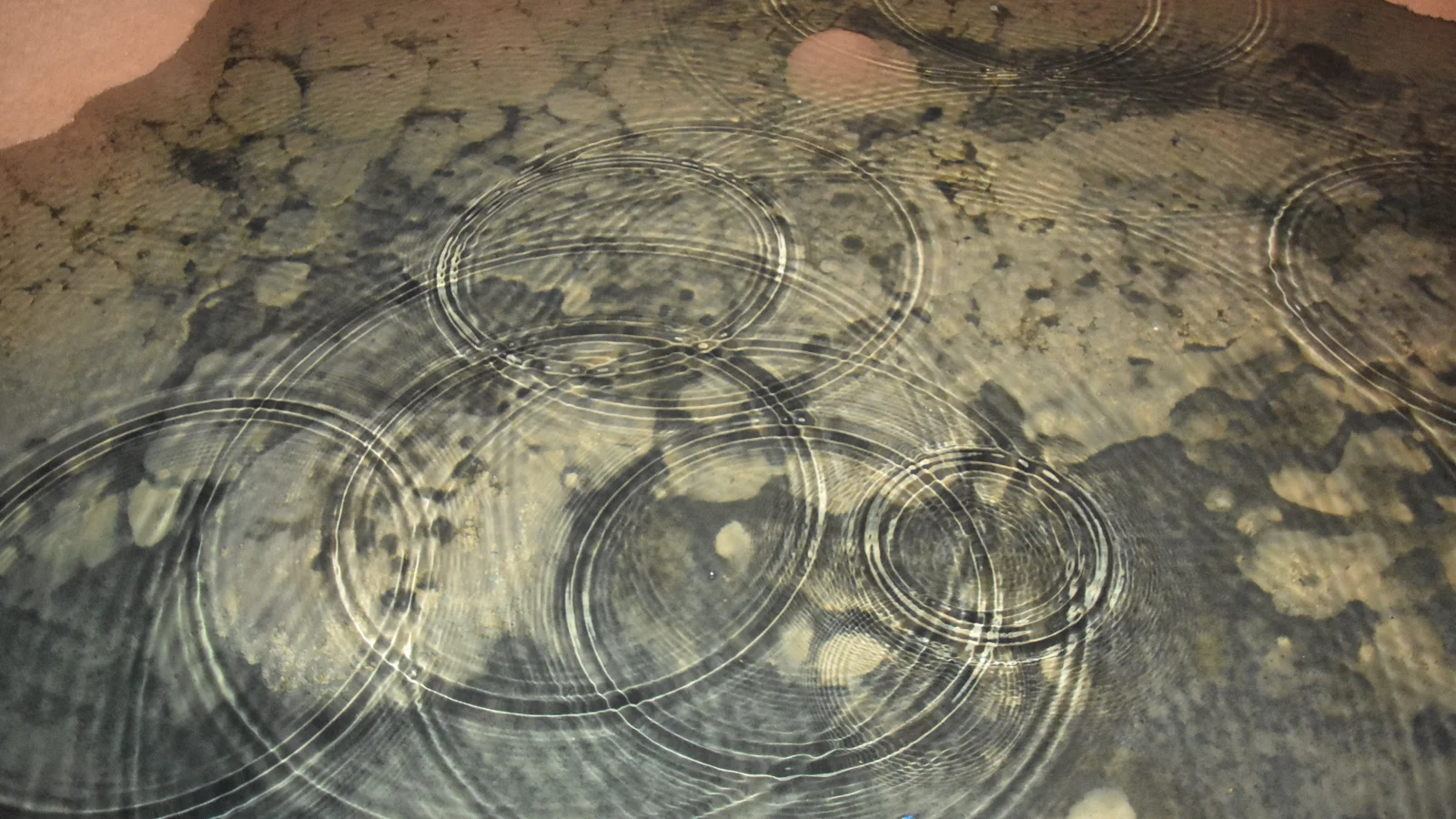

What Is the Meaning of Water in Dreams?
Water can nourish, carry, conceal, cleanse, or threaten. That range is why its meaning depends on the scene. A glass offered by a friend tells a different story from a wave sweeping that friend away. Begin with the action: Were you watching, crossing, escaping, floating, or trying to help someone? Then recall whether the scene felt inviting, urgent, or unfamiliar. The same dream symbol can take on different associations for different people. Water in your dream matters most in relation to what you did there.
Your personal history matters as much as the image. Someone who loves sailing may welcome an open sea; someone who recently survived a storm may dread it. Water is sometimes called a symbol of life because living things need it, but a dream is not a coded weather report or a universal message. The importance of water in your particular dream comes from its setting, the people present, and what happened next. When water appears, its symbolism can be personal.
Does a Water Dream Reflect Emotions or Everyday Concerns?
In a psychological reading, moving water might suggest feelings that are changing or difficult to contain. Still water might invite a question about rest, distance, or emotional stability. These are possibilities, not diagnoses. Ask whether the mood resembled a recent conversation, deadline, loss, or happy change in waking life. A dream could bring an ordinary concern into a dramatic scene without explaining it literally. The unconscious mind is one possible lens for reflection, not a way to prove a hidden message. What did you want to do when you saw the water?
Research finds some continuity between dreams and waking concerns, especially their emotional tone, although scenes can also be implausible or unrelated in obvious ways. That makes a recent experience a useful starting point, not a guaranteed explanation. Researchers Michael Schredl and Friedrich Hofmann describe links between waking activities and dream activities; David Kahn discusses similarities in emotional reactions across dreaming and waking. If the scene reminds you of a conflict, describe that connection in your own words before accepting anyone else's interpretation.
Source for this section: reference 1, reference 2
What Does a Dream About Water Mean When It Is Clear or Calm?
Clear water may invite thoughts of visibility: you can see the bottom, locate a path, or spot what is nearby. If you enjoyed swimming in a lake, the scene could mean that you feel able to face something directly. If you stared into transparent depths and felt exposed, the same clarity might be uncomfortable. Ask whether being able to see beneath the surface felt safe or intrusive. The answer tells you more than a preset label such as “good luck.” Even if the water is beautiful, your reaction may be mixed.
Calm water can also be a backdrop rather than the point of the story. Perhaps you waited on a dock while someone else made a decision, or hesitated to step into a beautiful bay. In that case the action matters: waiting, entering, or leaving. Even a positive dream can include uncertainty. Notice whether the water changed, who invited you in, and whether the final moment brought relief. A scene that begins peacefully need not stay peaceful throughout the dream.
Why Do Dirty or Murky Water Dreams Feel So Unsettling?
When the water is cloudy, ask what you could not see. Murky water could echo uncertainty about an outcome, incomplete information, or discomfort with a situation. The feeling may be mild curiosity rather than fear. If you chose to wade into the body of water and found firm ground, the ending offers a different clue from a scene in which you turned back. The water could represent a challenge you are willing to investigate, or simply a place that felt unpleasant. What appears in the dream after you enter may change your reading.
Dirty water is not evidence that a person or relationship is “toxic.” Perhaps a familiar neighborhood was muddy after rain, and you were searching for a lost object. Here the useful questions concern the search and what the object meant to you. Was the water actually dangerous, or only unattractive? Separating those details prevents an ordinary image from turning into an alarming verdict. If you cannot remember how you felt, leave that part of the dream open.
What Might a Flood or Raging Water Mean in a Dream?
A flood changes the boundaries of a familiar place. In a dream, it may mean that a demand seems to be spreading beyond the time or attention you can give it. If you were moving belongings to higher ground, you might be focused on protecting what matters. If you stood still as the street filled, feeling overwhelmed could be the most direct clue. If you felt rage, record that emotion too. Emotions are running high in some flood scenes, but not all. Consider what was at risk in the scene before assigning meaning to the rising water.
A raging flood may also recall an actual storm, a film, or a news story you recently encountered. Dreams can recombine recent impressions with personal concerns, so an intense scene does not forecast a disaster. Look at its ending: Did you find a route out, call for help, or watch from safety? Those actions could point toward resources you noticed even while afraid. The strongest interpretation should fit both your feelings and the events of the dream.
Does a Dream of Drowning Signal a Lack of Control?
A drowning scene often leaves a powerful physical impression. You may wake with the memory of struggling for air or trying to reach another person. A useful first question is whether the situation resembled something that currently asks more of you than you can comfortably give. That association could mean you want help, more time, or a clearer boundary. It does not mean a dream has predicted an accident or revealed a hidden condition.
Details complicate the picture. Were you sinking, holding your breath voluntarily, or diving and unable to find the surface? Did someone rescue you, or did you reach the shore yourself? One scene centers on fear; another on endurance. Water in the dream might be a setting for a rescue rather than its central problem. If the image followed a recent swim, frightening story, or restless night, those experiences are also plausible influences. Let the sequence guide your reading rather than treating every underwater scene as the same dream.
What Does Swimming or Falling into Water Suggest?
Swimming places your movement at the center of the scene. In a swimming pool with marked lanes, you might be practicing, competing, or trying to keep pace. In open water, you might be exploring or looking for land. If you moved easily, ask what currently feels manageable. If every stroke was hard work, ask where effort feels unusually high. The destination, companions, and pace can change the story more than the type of water.
A sudden fall into water introduces surprise. Did you slip, jump, or get pushed? Did the shock turn into play once you surfaced? A sudden plunge could be associated with an unexpected change or a fresh start, but the emotion afterward matters. Sometimes the scene invites you to immerse yourself in something new; sometimes it reflects reluctance. If you recall a concrete situation, compare the two without assuming they match perfectly. An association is useful when it helps you think, even if it remains tentative.
Could a River, Waterfall, or Sea Show Change in Your Dream?
A river or stream moves through a landscape with a direction you can follow or resist. If you crossed to meet someone, the crossing might matter more than the current. If you watched an object drift away, the loss might be the focus. Water is constantly changing in these scenes, but that alone does not prove you are entering a new stage in your life. Water often accompanies transition in stories; your dream may instead center on a particular person. Ask what changed and whether you welcomed it.
A waterfall can be exhilarating from a safe overlook and frightening from its edge. Height, sound, spray, and distance shape the mood. Perhaps you found a trail beside it, or perhaps you were carried toward it. A vast sea, meanwhile, can suggest possibility or isolation depending on whether a boat, shore, or companion was visible. The water could indicate an opportunity for growth if you found a way across, though another reading might fit. These settings allow positive and negative readings; the strongest one accounts for what you actually did, saw, and felt.
Do Thirst, Holy Water, or Walking on Water Have Spiritual Meaning?
Drinking water in a dream might be a straightforward image of thirst, care, or accepting help. Who offered the glass? Did it satisfy you? In a religious setting, holy water may be associated with blessing or purification for someone who recognizes that practice. For another dreamer it may recall a ceremony, building, or family memory. Spiritual meaning depends on your own tradition and the scene's context; it cannot be assigned from the liquid alone.
Stepping across a lake's surface may bring a Christian story to mind, particularly if the setting or your beliefs make that connection relevant. You could reflect on trust, doubt, or a sense of being tested without claiming the dream delivers a divine instruction. A spiritual reading might describe spiritual cleansing, spiritual transformation, or spiritual growth, but these are optional lenses, not facts established by the dream. If a faith interpretation matters to you, consider the tradition's actual teachings alongside your personal associations.
How Can You Interpret Water in Dreams for Yourself?
Write down the scene before looking it up. In a dream journal, note the setting, who was there, what the water did, your emotion, and the last thing you remember. Then ask three questions: What changed? What was I trying to do? What recent event carries a similar feeling? This gives you a practical approach to dream interpretation. A dream dictionary can suggest possibilities, but your account supplies the details that make them useful. Water in a dream may carry a positive or negative association depending on that context.
Compare two or three explanations rather than searching for a single verdict. If a dream featured an overflowing bath, for example, you might think about a household task, an interrupted rest, or a conversation that seemed to escape your control. Which connection fits the scene and your experience? The dream could be telling a story about a concern, or it could simply borrow striking images from memory. To interpret dream water, start with the event rather than its supposed universal code. You can keep an interpretation provisional and revisit it if a pattern appears.
There is no universal formula for these scenes. A common dream of rain may evoke relief for one person and disappointment for another. Water in dreams often invites deep emotional associations, including hopes of emotional healing during a difficult period in life. Yet the dream is often ambiguous. Do not assume it must mean that your subconscious knows an answer you do not. Use these questions to move forward in life only insofar as they clarify a choice you already face. The most useful outcome may be a clearer description of what you felt.
What to remember
- Begin with the action, setting, and feeling in the dream; the image alone cannot settle its meaning.
- Clear, muddy, still, and moving water offer different questions, not guaranteed predictions.
- A frightening flood or underwater scene is worth describing carefully before you draw conclusions.
- Personal experience and recent concerns can inform a reading; a religious lens is optional and depends on your beliefs.
- Record the details soon after waking, compare plausible explanations, and keep uncertain ones open.
Sources and scope
References support the statements identified above. The writing exercises and worked examples are editorial suggestions, not findings from these sources.
1. Schredl, Michael, and Friedrich Hofmann. “Continuity between Waking Activities and Dream Activities.” Consciousness and Cognition 12, no. 2 (2003): 298–308. Read source
Abstract and limitations reviewed September 15, 2026. Correlational diary evidence for a qualified continuity question; it does not assign meanings to particular natural elements or predict an individual dream.
2. Kahn, David. “Reactions to Dream Content: Continuity and Non-continuity.” Frontiers in Psychology 10 (2019): 2676. Read source
Primary study on emotional reactions in dreams, not water symbolism.