 The Uncanny Post
Interpretation · Dream reading
Snake Dream Meaning: What Does a Dream About Snakes Mean?
A snake dream may feel urgent even when its details are hazy. To understand a dream about snakes, begin with what happened: where the animal was, what it did, how you responded, and what you felt. This guide offers a practical way to compare possible meanings, including danger, memory, change, and spiritual associations, without treating any interpretation as a verdict. Use the examples to test your own account.
By The Uncanny Post · 9 min read · Published
Share this article
Open a share composer
Copy a link to post yourself
These services do not offer a dependable web share window here. Choose one to copy the link and open its site, then paste it where the service allows links.
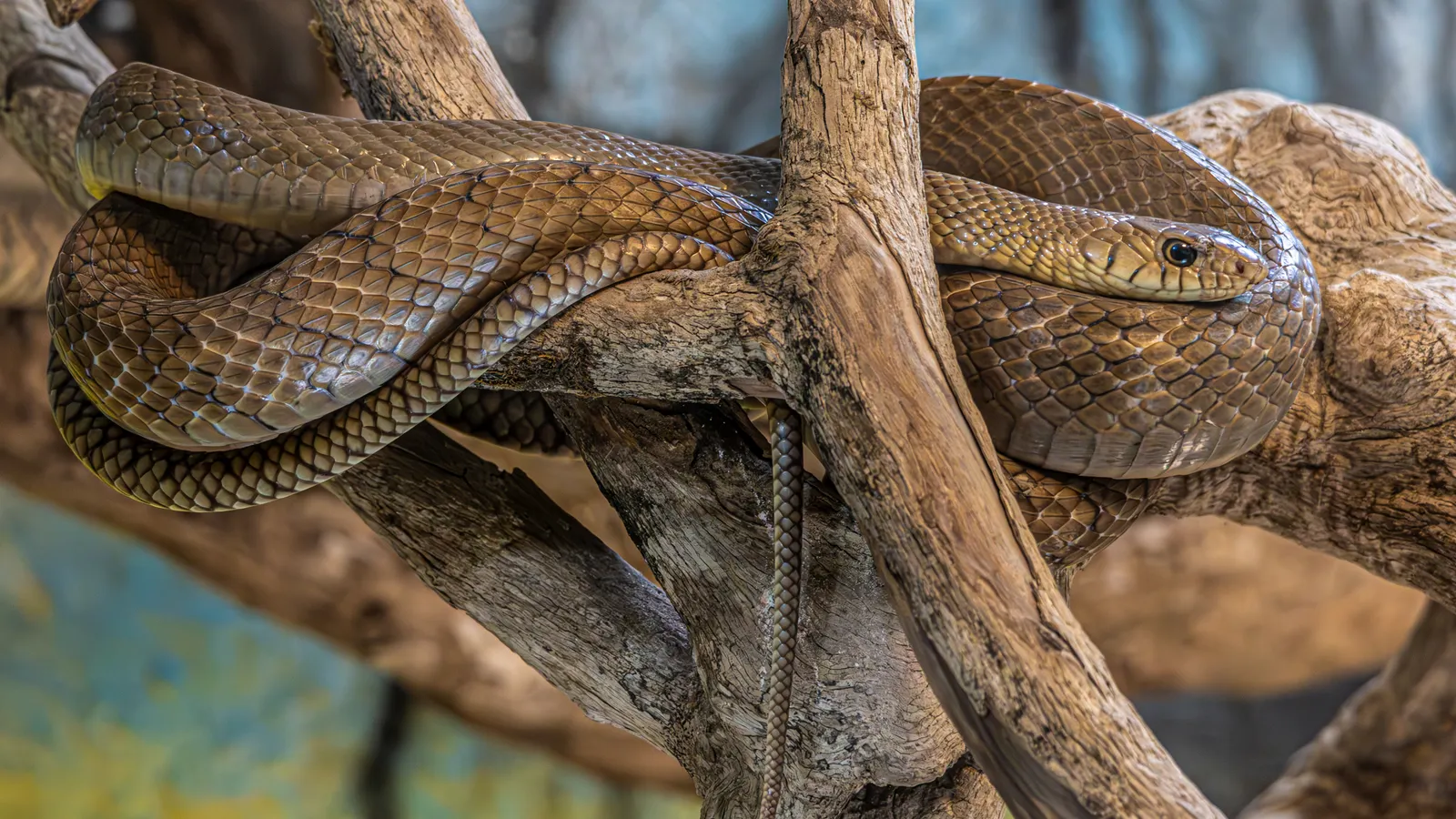
What Does It Mean When You Dream of a Snake?
Start with one sentence describing the dream: “A small animal crossed the garden path while I stood still.” Then restore the detail you remember: perhaps it was a snake, perhaps there were two snakes, or perhaps your sister warned you before you saw anything. The dream sequence matters. “I saw a snake and ran” differs from “I ran because I expected one.” Write actions before motives. Separate events from expectations.
Your dream account and associations guide interpretation. The meaning of a snake dream is a hypothesis, not a fixed translation. A recent encounter outdoors could be a source. If it blocked an exit while you searched for help, the sense of being cornered may matter. Neither establishes a fixed symbol; the context of the dream matters. A snake in a dream may evoke fear, curiosity, or a remembered encounter; a dream about a snake alone does not tell you which. Ask what the image adds to this particular dream. When someone asks what dreams about snakes mean, the most honest answer begins with their own dream, rather than a stock definition.
How Can You Read Snakes in Dreams Without Guessing?
Use five notes: scene, nearness, action, known association, emotion and response. Was the snake in your dream across a field, behind glass, or inside the house? Was it moving closer? Record the behavior of the snake separately from what you expected it to do. Then note any remembered animal, film, place, story, or conversation. Finally, describe what you felt in the dream and what you did. These observations let you test a reading: when dreaming of a snake, ask whether your account fits its actions.
Suppose you see snakes at a zoo, then later under your bed. Location changes the possibilities. Write two readings and a counterexample for each: “pressure closing in” fits poorly if the zoo enclosure stayed locked and you were curious. The dream image may symbolize something different to someone else; test it against your details.
In a study of 48 students and 469 reports, participants linked many dreams to past or anticipated events. Self-identified sources cannot decode your image, but make recent memories worth checking.[1]
Source for this section: reference 1
Does a Snake Bite or Snake Biting Change the Dream Meaning?
Distinguish a bite that occurred from one you feared. “It was trying to bite” describes an attempted action; “I thought it might strike” describes an expectation. If you were bitten by a snake, note where, how you responded, and whether anyone helped. If you were attacked by a snake without contact, keep that separate too. Fear of a bite can be intense, but fear and contact are different events.
Compare three doorway dreams: waiting beside a coiled animal, pulling your sleeve from its mouth, and helping a companion after a strike. The first may symbolize uncertainty; the others concern contact or another person. None identifies someone dangerous in your life by itself.
If it was venomous, did you recognize that in the dream or only after waking? Keep later knowledge separate from your original reaction. A physical symptom deserves attention on its own merits; an image is not medical evidence.
What If an Animal Chases You in a Dream?
If you were chased by a snake, describe the dream route and ending. Did you hide, call for help, climb, stop to watch, or turn around? Being bitten or chased can suggest threat, but avoidance becomes a stronger comparison only if you can identify a particular situation you are avoiding. If you stayed to protect a child or pet, responsibility might explain more than fear. A dream of seeing the animal move away suggests yet another comparison. Use your choices to distinguish the possibilities.
If you saw snakes everywhere, did they block your path? Multiple snakes could be scattered harmlessly in grass, gathered around one doorway, or moving in different directions. Many snakes change the scale without supplying the meaning. If you dreamed of two snakes, record whether they acted together, competed, or never interacted. What you noticed about their number in the dream matters more than a numerical code. What if someone else had a snake in their dream? Ask about that person’s account rather than transferring your own associations.
A dream without an exit can unsettle you. Compare it with experience only when you recognize a close match; intensity cannot predict an event.
Does Species or Color Matter in Your Dream?
Record the type of snake only when it was identifiable in the dream. A boa constrictor might matter because you recognized its shape or felt trapped by its coils; the name alone does not prove anything would constrict you. An animal trying to kill you is a very different dream from you killing the snake; keep the direction of action clear. A common snake from your neighborhood might point first toward a familiar encounter. If you encountered one on a walk yesterday, ask whether its movement or surroundings resemble the scene you remember.
A black snake against a white wall stands out by contrast. A green snake among leaves may nearly disappear. A white snake could remind you of an illustration, and green and black stripes may recall a toy. These are dream prompts for association, not a chart in which each color has one meaning. Even if color stands out, your decision to stay may matter more.
Did it slither under furniture or stay still as you passed? Record later associations separately: “After waking, the pattern reminded me of a photograph.”
Can Shedding Suggest a Change?
Snakes shed their skin as part of their life cycle. When a snake sheds its skin in the dream, the image may suggest rebirth or personal transformation. If the scene showed shedding, describe whether you watched the process, found an empty skin, or touched it. A snake eating its own tail is a different image, sometimes recognized as an ouroboros. Verify what you saw first.
Statements such as “snakes are symbols of transformation” describe one available metaphor, not a rule for every person. A job change or new relationship might make the image suggest a need for change. Test it against your reaction: were you relieved, repulsed, protective, or indifferent? A pleasant change metaphor fits less well when the dream focused on fear of a hidden animal.
Healing and renewal or healing and transformation can be meaningful personal metaphors, never a forecast about health. The meaning of dreaming about snakes becomes more precise when you say which detail supports the comparison.
What Spiritual Meaning Might This Image Have?
This is an ancient symbol in many parts of human culture, yet the traditions do not supply a single interpretation for your personal experience. The staff of Asclepius, associated with the ancient Greek god of healing, helps explain the snake in the World Health Organization's emblem.[2] That historical connection offers a possible association if your dream concerned care or recovery. It cannot turn every image into a message about health.
In Hindu mythology and related South Asian art, nagas appear as snake beings with varied roles. Their complex nature shows how snakes can represent different ideas even within related traditions; avoid a one-word meaning for your dream. A Metropolitan Museum of Art object note describes associations with water and agricultural abundance as well as danger; Hindu, Jain, and Buddhist traditions have incorporated them.[3] If this is your tradition, recall a teaching or practice you know. Resemblance to an online image proves little.
Source for this section: reference 2, reference 3
Can a Snake Dream Connect to Memory or an Emotional Issue?
Before choosing a broad theory, list recent inputs: a wildlife video, a conversation, a pet, a drawing, a trail, or a hose you mistook for an animal. The source of the image may lie partly in how these fragments were recombined. In a two-week diary study with 32 participants, most reports contained some autobiographical memory features, while complete replays of events were rare.[4] That result supports checking personal sources; it does not establish the cause of your account.
An issue or emotional concern may also be relevant. Suppose an animal waits outside your door while you are deciding whether to answer a difficult message. Compare the real decision, feeling, and connecting detail. Without those links, “hidden threat” fits almost anything. Ask what else besides the animal resembles your situation in the dream.
Consider a fictional laundry-room scene: a small animal rests behind the washer while your sister closes the door and you try to guide it outside. You might first remember one you found in a garden last weekend. A real disagreement about an unwelcome visitor is another possibility. The dream animal alone does not establish betrayal. The dreamer’s frustration and helpful action are the useful discriminators here.
Source for this section: reference 4
Why Do Snakes Return in Dreams?
If you keep dreaming of snakes, compare episodes rather than assuming their repeated image has one explanation. When someone says, “Why are there snakes in my dreams?” ask whether the setting, action, and feeling repeat too. In one account you might freeze before an unseen animal; in another you calmly move one to safety. Their shared subject conceals a difference in what you actually did.
Date each record, including the scene, feeling, response, and recent sources. After a week, compare locations and actions. A pattern associated with dreaming about snakes invites investigation; it proves no diagnosis or prediction. Use a role such as “coworker” where a person’s name adds nothing.
If disturbing dreams disrupt sleep or daily life, consider talking with a qualified professional. You need no symbolic explanation to seek help; attend to sleep and safety in waking life.
How Can You Review Your Dream for Yourself?
Take three minutes. First, write a plain account in order: who was there, where the animal appeared in the dream, what it did, and what you did. Second, mark each statement as observed, expected, or remembered after waking. Third, propose two readings, including a recent-memory explanation if one is available. For each, name a supporting detail and a detail it does not explain. This dream review can help you interpret without forcing certainty. Ask what you mean when you dream of an animal: its behavior, your feeling, or a personal memory?
Suppose an animal was behind a closed window while you waited outside. An approaching-threat reading would need evidence that it could cross the barrier; a memory reading might gain support from a recent zoo visit. Ask which dream reading explains more without rewriting the scene. If the animal suddenly vanished, record that too. It may also mark where your attention shifted. Depending on the context, you might retain both possibilities or decide that neither is convincing yet.
A snake may appear in dreams for reasons you cannot recover. If you saw it eat, record what it consumed. A dream symbol has no fixed meaning. When a snake appears in your dream, keep your strongest association alongside uncertainty. Start a record, compare recurring accounts, or use the dictionary with context. Add later connections as dated notes.
- Record the scene, the animal's action, your response, and what you felt before choosing an explanation.
- Separate an actual encounter from a feared one; a possible strike is different from contact.
- Check recent experiences and your own associations before adopting a generic interpretation.
- Treat change, danger, and spiritual readings as possibilities to test against the details.
- If an account remains unclear, leave it open; a disturbing image alone cannot predict an event or diagnose a condition.
Sources and scope
References support the statements identified above. The writing exercises and worked examples are editorial suggestions, not findings from these sources.
1. Erin J. Wamsley. “Constructive Episodic Simulation in Dreams.” PLOS ONE 17, no. 3 (2022): e0264574. doi:10.1371/journal.pone.0264574. Read source
48 college students and 469 laboratory reports; participants identified possible waking sources retrospectively. This does not validate particular symbols or the editorial exercises.
2. World Health Organization. “WHO Logo.” Read source
The WHO serpent-and-staff emblem is used as an example of a distinct cultural context, not proof of a dream interpretation.
3. Metropolitan Museum of Art. “Standing Nagaraja.” Read source
The museum describes the naga figure and contextual traditions; this does not establish a universal dream meaning.
4. Josie E. Malinowski and Caroline L. Horton. “Memory Sources of Dreams: The Incorporation of Autobiographical Rather Than Episodic Experiences.” Journal of Sleep Research 23, no. 4 (2014): 441–47. doi:10.1111/jsr.12134. Read source
Primary abstract previously checked: 32 participants and two weeks of diary records. General memory context only; no finding about a particular animal or a universal symbolic meaning.